How to Stop Straining on the Toilet
Straining on the toilet is the habit most closely tied to hemorrhoids, and one of the easiest to change once you know what’s behind it. Pushing hard raises the pressure in the veins around the anus, and doing it day after day stretches the tissue that holds hemorrhoids in place. The aim isn’t to push better. It’s to arrange things so you barely need to push at all.
See a doctor if constipation is new and persistent, especially after age 45, if you have unexplained weight loss, blood in or on your stool you haven’t had checked, or a change in bowel habits lasting more than a few weeks.
1. Make the stool easier to pass
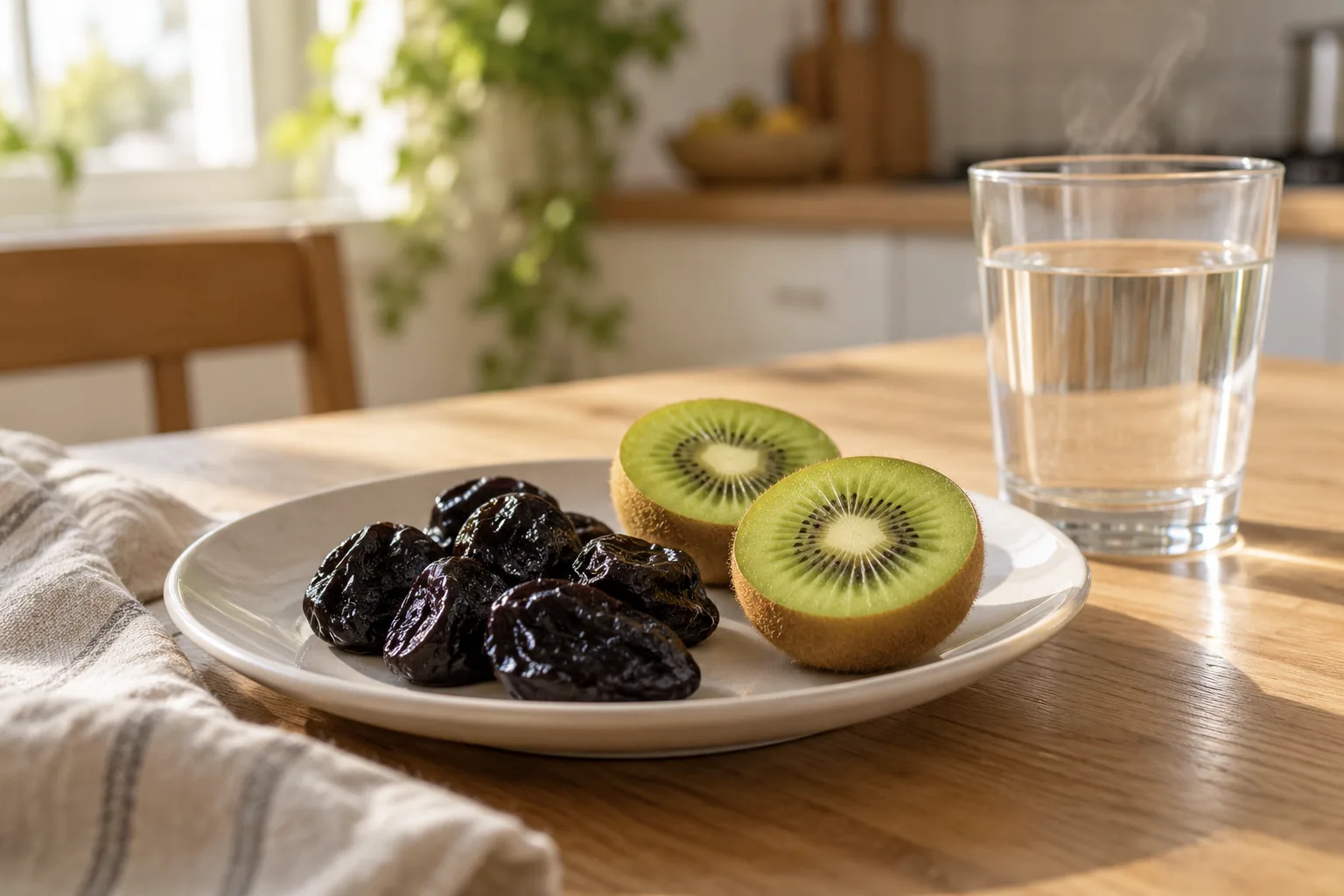
Hard, dry stool is the main reason people strain. Most adults need around 25 to 35 grams of fiber a day and eat far less. Add it gradually over a couple of weeks to avoid bloating, and drink enough water to go with it, since fiber without fluid can make things worse. A soluble fiber supplement such as psyllium is a simple, well-studied option; we compare it with a structured plan in the protocol vs fiber supplements.
2. Change your position
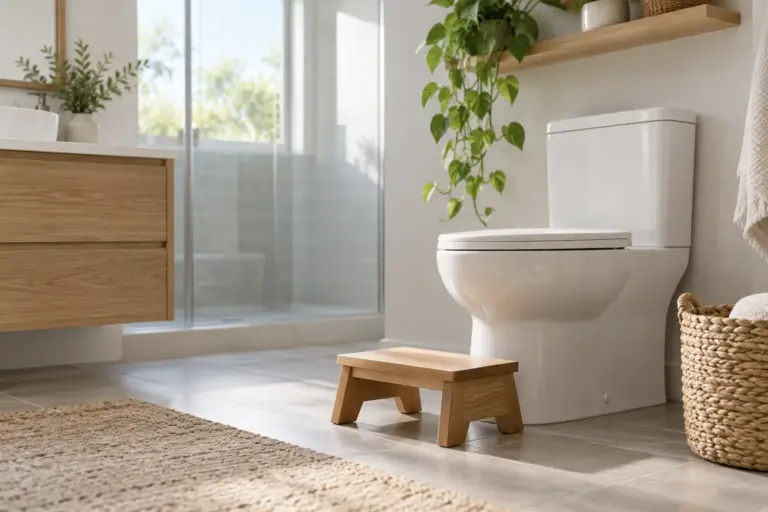
Sitting on a standard toilet keeps a bend in the lower rectum that works a bit like a kink in a hose. Raising your knees above your hips with a small footstool straightens that angle. Lean forward slightly with your elbows on your knees and keep your back straight. Many people find this alone cuts the effort noticeably.
3. Breathe instead of holding your breath
Holding your breath and bearing down is exactly the pressure you’re trying to avoid. Instead, breathe out slowly and let your belly expand as you relax the muscles around the anus. It feels odd at first and becomes natural quickly.
4. Go when you feel the urge, and don’t wait around
- Delaying makes stool harder and drier.
- Sitting for more than about five minutes lets the anal veins fill with blood. If nothing happens, get up and try later.
- Leave the phone outside. It’s the main reason toilet visits stretch to twenty minutes.
5. Build a routine
The bowel is most active after waking and after meals. Sitting down at the same time each day, often after breakfast, gives it a predictable window. Regular movement during the day, even a brisk walk, helps too. See exercises for hemorrhoids for what helps and what adds strain.
What not to rely on
Stimulant laxatives can help occasionally, but using them long term without advice isn’t a solution. If you find you need them regularly, talk to your doctor about why.
Affiliate note: the button below is an affiliate link. If you buy through it we may earn a commission at no extra cost to you. How we handle this.
Want these habits in one plan? The Hemorrhoids Healing Protocol turns fiber, hydration and toilet routines into a three-week programme. It won’t fix a thrombosed hemorrhoid or replace a check-up; our review covers what it does well and where it overreaches.
Frequently Asked Questions
Does a toilet stool really help?
Small studies show people empty their bowels faster and with less effort when their knees are raised. It’s inexpensive and worth trying.
How long should I sit on the toilet?
A few minutes at most. If nothing happens, get up and come back later.
Can straining cause hemorrhoids on its own?
It’s one of the main contributors, along with constipation, prolonged sitting, pregnancy and heavy lifting.
What to Read Next
- Hemorrhoid Diet: What to Eat, What to Limit, and a 7-Day Plan
- How to Prevent Hemorrhoids From Coming Back
- What Causes Hemorrhoid Flare-Ups?
- Protocol vs Fiber Supplements
Affiliate disclosure: some links on this page are affiliate links. If you buy through them we may earn a commission at no extra cost to you. See our affiliate disclosure and medical disclaimer.
Sources and further reading
General background on hemorrhoids from public health sources: