Why Straining on the Toilet Causes Hemorrhoids
Straining is the single most consistent thread running through almost every hemorrhoid case — more than diet, more than any one food, more than genetics on its own. Understanding exactly why it causes hemorrhoids, rather than just being told to “stop straining,” makes it much easier to actually change, because a lot of straining happens without people realizing they’re doing it.
Chronic straining can also be a sign of an underlying issue — including diet, medication side effects, or in some cases a condition affecting bowel function. If straining is a constant, not occasional, part of your bowel movements, mention it to a doctor.
The mechanism, in plain terms
The veins around the anal canal are thin-walled and sit in tissue that’s naturally cushioned and somewhat elastic — that’s normal anatomy, present in everyone. Straining sharply raises the pressure inside the abdomen and pelvis, and that pressure pushes directly against those veins. Do it occasionally and the tissue recovers fine. Do it regularly, and the veins gradually stretch, swell and lose some of their ability to snap back — which is, at its core, what a hemorrhoid is.
Why it’s often invisible to the person doing it
Most people picture straining as an obvious, effortful push. In practice, a lot of it is quieter than that: holding your breath and bearing down (called a Valsalva maneuver) while waiting for stool to move, sitting and “trying” for several minutes when nothing is really happening, or pushing reflexively out of habit even when stool is already soft. None of that feels dramatic in the moment, but it produces the same pressure spike as an obvious, effortful strain.
What makes straining more likely
- Hard or insufficient stool — harder stool simply requires more force to pass, so straining becomes almost automatic
- Sitting on the toilet too long — waiting rather than going when the urge is clear, then straining once you’ve committed to sitting there
- Poor toilet posture — sitting at a 90-degree angle keeps part of the rectum slightly kinked, which some people compensate for by pushing harder than they’d otherwise need to
- Ignoring the urge — delaying a bowel movement lets stool sit longer and dry out, making it harder when you finally do go
Breaking the pattern
| Change | Why it reduces straining |
|---|---|
| Go when you feel the urge | Stool is softer and easier to pass than if delayed |
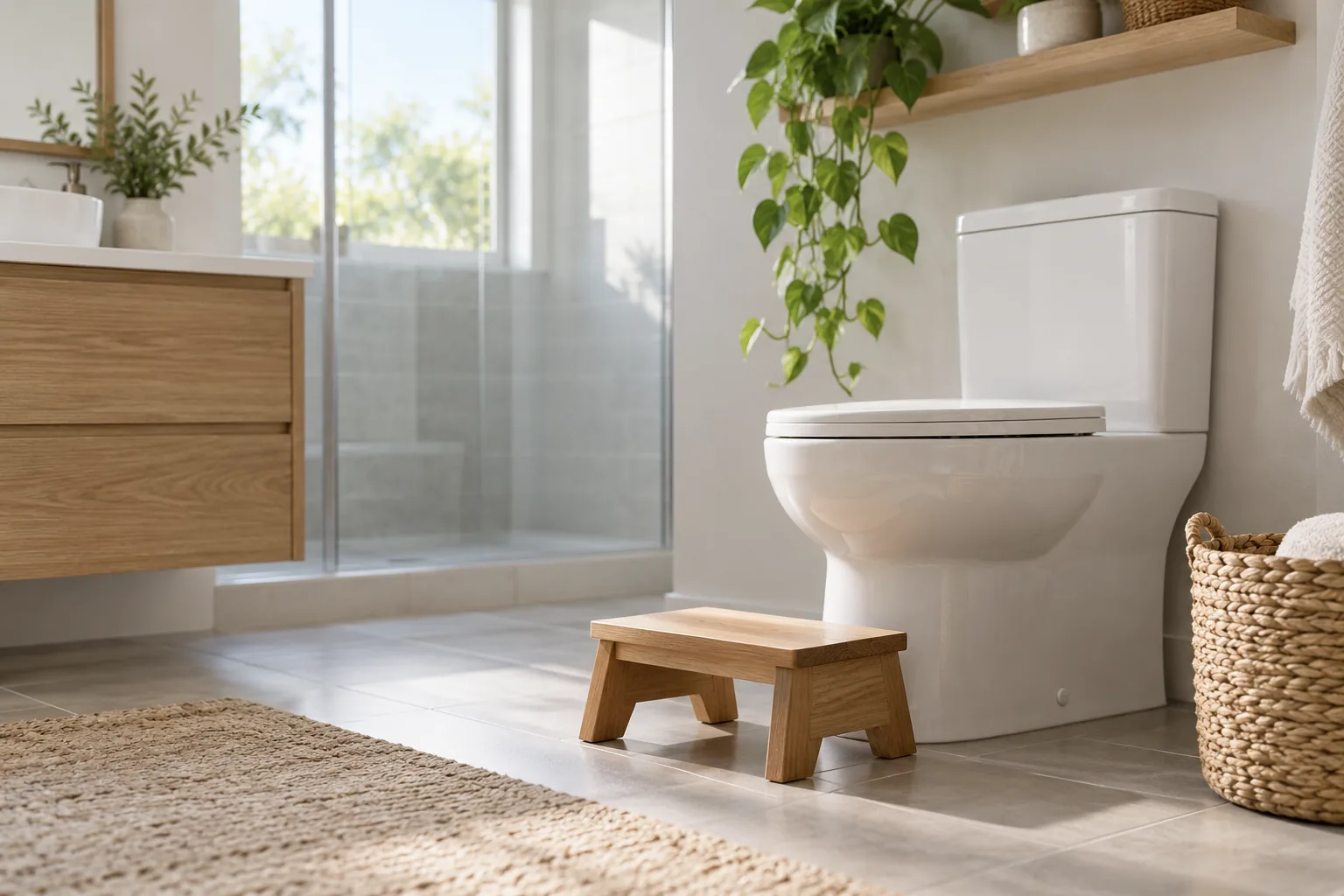
| A footstool under your feet | Straightens the angle, reducing the push needed |
| Breathe out, don’t hold your breath | Avoids the abdominal pressure spike of a Valsalva maneuver |
| Set a mental 2-minute limit | Stops “waiting it out” from turning into repeated pushing |
| Higher fiber and fluid intake | Softer stool needs far less force to pass |
Our full breakdown of how to stop straining on the toilet walks through each of these in more practical detail, including the footstool posture change specifically.
How long it takes for the habit to matter
A single strained bowel movement, on its own, isn’t what causes a hemorrhoid — it’s the repeated pressure over weeks and months that gradually weakens the tissue. That’s actually good news for prevention: because it’s cumulative, changing the pattern now genuinely reduces the ongoing pressure, even if some tissue is already stretched from past habits.
Affiliate note: the button below is an affiliate link. If you buy through it we may earn a commission at no extra cost to you. How we handle this.
Fixing the straining habit is one part of a bigger picture. The Hemorrhoids Healing Protocol combines toilet posture, fiber and pressure changes into one structured plan rather than leaving you to piece it together. See our honest review.
Frequently Asked Questions
Can occasional straining cause a hemorrhoid?
Rarely on its own — it’s the repeated, ongoing pressure that does most of the damage. One difficult bowel movement is unlikely to be the whole cause.
Is holding your breath while pushing really that different from a normal push?
Yes — breath-holding (a Valsalva maneuver) significantly increases abdominal pressure compared to pushing while breathing normally, which matters for the veins involved.
Does a footstool actually make a measurable difference?
Many people notice they need to push less once the angle is straightened, since it reduces a mechanical kink in the rectum that otherwise requires extra effort to overcome.
How do I know if I’m straining without realizing it?
If you’re regularly sitting for several minutes “waiting,” or notice yourself holding your breath, those are both signs, even without an obvious dramatic push.
What to Read Next
- How to Stop Straining on the Toilet
- How to Prevent Hemorrhoids From Coming Back
- What Causes Hemorrhoid Flare-Ups?
Affiliate disclosure: some links on this page are affiliate links. If you buy through them we may earn a commission at no extra cost to you. See our affiliate disclosure and medical disclaimer.
Sources and further reading
General background on hemorrhoids from public health sources: