
Coconut Oil for Hemorrhoids: What It Can and Can’t Do
Short answer: coconut oil is a plain moisturizer that many people find gentle on irritated skin, but we found no trials showing it shrinks or treats hemorrhoids. Used on the outside, in a small amount, on unbroken skin, it is low risk for most people. It should not be used as a reason to delay a medical check for bleeding, and we do not advise mixing it with essential oils.
Get urgent help first.
Bleeding that will not stop, a lot of blood or clots, black or tarry stools, dizziness or faintness, chest pain, fever with severe pain, or a lump that turns dark and very painful all need same-day care: call 911 (999 in the UK) or go to the emergency department. Any rectal bleeding that has not been examined needs an appointment. See bleeding hemorrhoids: when it’s an emergency and hemorrhoid warning signs.
Key takeaways
- No hemorrhoid-specific trials of coconut oil were found; its use is traditional and based on its moisturizing effect.
- Topical use on the outside of the anus is the only use we discuss; skin reactions and allergy are possible.
- Oils can weaken latex condoms and can stain underwear.
- Do not rely on it for bleeding, a prolapsed or very painful lump; those need medical care.
- Home-made creams that add essential oils to coconut oil raise the risk of irritation; see our caution below.
On this page
Why people use it
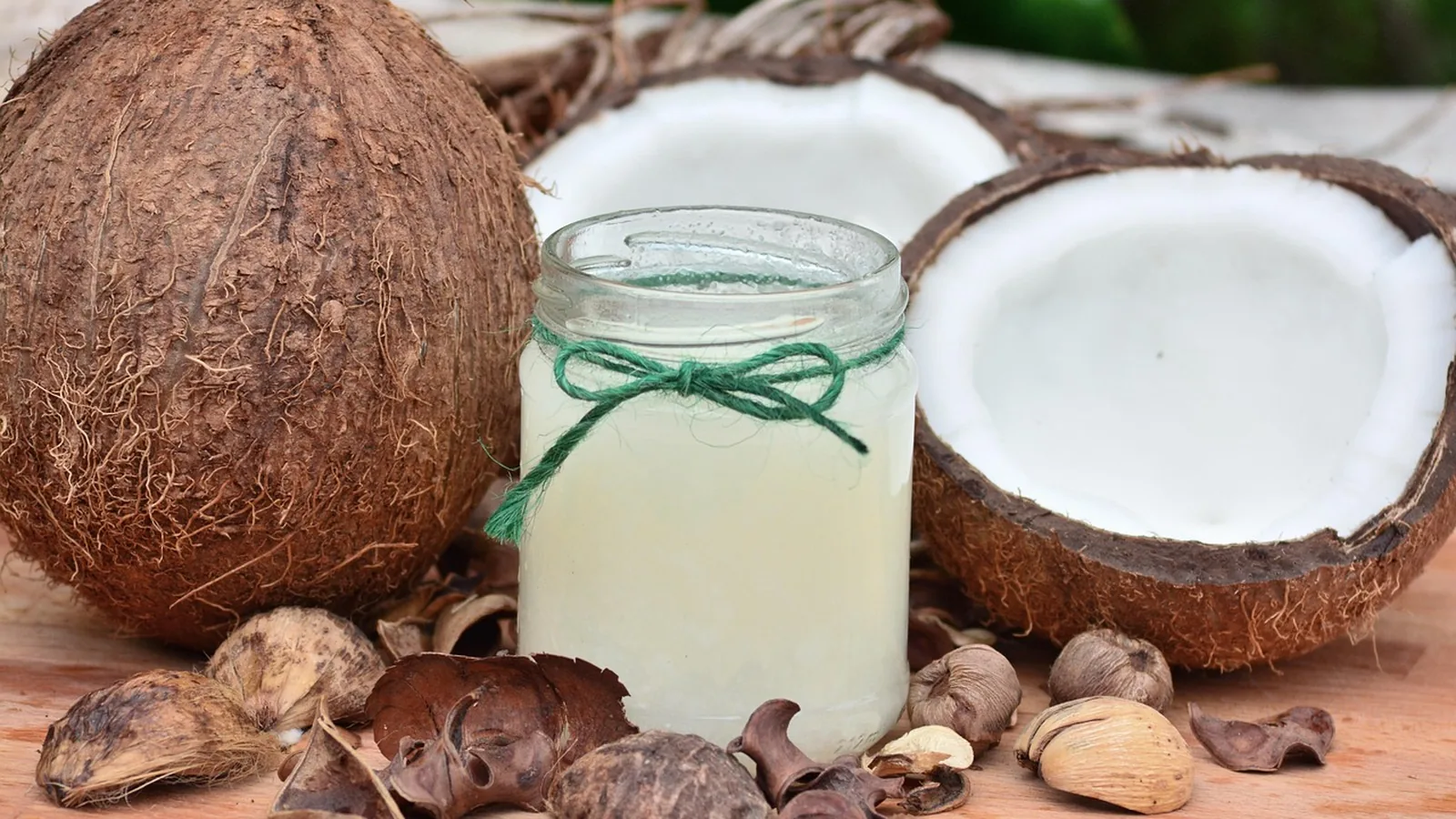
Coconut oil is solid at cool room temperature and melts on skin. People reach for it because it is bland, cheap and already in the kitchen, and because friction and dryness from wiping, diarrhea or constipation can make the skin around the anus sore. A thin layer of any bland emollient can reduce friction and feel soothing, which is probably the main reason people report comfort. That is a comfort effect on the skin, not a treatment for the swollen vascular tissue underneath.
What the evidence says
The NIDDK treatment page and the NHS treatment page list fiber, fluids, avoiding straining, warm baths, cold packs and short-term over-the-counter products. Neither mentions coconut oil. We searched for trials of coconut oil for hemorrhoids and found none we could verify, so we cannot tell you it works. Claims you may read online that it "heals" or "shrinks" hemorrhoids are not backed by evidence we can point to.
What can be said safely is narrower: as a bland moisturizer it may reduce friction on dry skin around the anus. If your symptoms are itching and soreness from dryness, a clinician might suggest a barrier product; coconut oil is one of several household options, not the best supported.
Topical vs oral: two different questions
Some natural-remedy guides recommend coconut oil in two ways: applied to the skin, and eaten, on the idea that it softens stool. We cover only the skin use. Eating large amounts of any fat can cause loose stools in some people, but we found no good evidence that it helps hemorrhoids, and we give no amounts. If you struggle with constipation, the better supported route is fiber and fluid; see how much fiber you need and the hemorrhoid diet. Ask a clinician before using supplements or large dietary changes, especially with gallbladder, pancreas or cholesterol conditions.
Using it on the skin safely
- Outside only. Do not insert oil into the rectum as a home-made suppository; we found no evidence for it, and it is not a substitute for products made for that purpose. See hemorrhoid suppositories.
- Test a small patch first on the inner forearm and wait a day. Coconut allergy is uncommon but possible, and some people simply react to fragrance or impurities.
- Use plain, unscented oil from a clean container, and keep your fingers clean to avoid introducing germs onto irritated skin.
- A thin layer is enough. Thick layers trap moisture and can worsen itching in some people.
- Latex warning: oils can weaken latex condoms and diaphragms. Use another method if you are relying on them.
- Stop if skin stings, reddens or itches more, and see a clinician if symptoms last beyond about a week (NIDDK).
- Do not use it on bleeding or broken skin without medical advice. A tear (fissure) needs a diagnosis; see hemorrhoids vs fissures.
Mixing with essential oils: why we are cautious
Coconut oil is often described as a "carrier" for essential oils in home-made creams. Essential oils are concentrated plant chemicals that can cause irritation and allergic reactions, and the skin around the anus is thin and sensitive. The NCCIH notes that tea tree oil may cause redness or irritation and should not be swallowed. We do not advise putting essential oil blends on or near the anus, in any dilution. See tea tree and essential oils for hemorrhoids for why. If you are pregnant or breastfeeding, ask your clinician before using any oil blend.
What the program we read says
We read the member copy of the Hemorrhoids Healing Protocol provided by the publisher. It describes coconut oil as having many health benefits, suggests quality sourcing, and uses it as a base for home-made creams that include essential oils and other ingredients, and it also suggests oral use for constipation. We think the plain skin use is reasonable for comfort; the claims of broad healing properties are not supported by hemorrhoid-specific evidence we could verify, and the essential-oil formulas raise the irritation concerns above. See our program review for the longer assessment.
What is better supported
- Soft stool and no straining: how to stop straining.
- Warm baths after bowel movements: sitz bath guide.
- Gentle cleaning with unscented products: wipes and witch hazel pads.
- Short-term OTC products chosen with a pharmacist: using hemorrhoid cream correctly.
Our overview of everything people try is in home remedies for hemorrhoids.
Affiliate note: the button below is an affiliate link. If you buy through it we may earn a commission at no extra cost to you. The publisher, Blue Heron Health News, gave us a free member copy of the program so we could read it; that did not buy a positive review. The publisher’s own sales page makes stronger claims than we can support, and we do not endorse them. How we handle this.
If you are comparing paid guides: the Hemorrhoids Healing Protocol is a $49 PDF whose home-made creams use coconut oil and essential oils. It is not medical advice and does not replace an examination. We explain what it contains, and where we disagree with it, in our review.
Questions to ask your doctor or pharmacist
- Is it OK for me to put a bland oil on the skin around the anus, or could it hide a problem?
- Is the itching or soreness more likely from dryness, a fissure, or a hemorrhoid?
- Is there any reason (allergy, pregnancy, medicines) I should avoid a home-made cream?
- Would a barrier cream or a prescription product suit me better?
Frequently asked questions
Does coconut oil shrink hemorrhoids?
We found no trials showing that it does. At most it works as a moisturizer on the skin, which may reduce friction and soreness.
How do you use coconut oil for hemorrhoids?
People apply a thin layer of plain, unscented oil to clean, dry skin outside the anus after washing, after patch-testing a small area. Do not insert it, and stop if the skin reacts.
Is coconut oil safe for hemorrhoids?
For most people, topical use on unbroken skin is low risk, but allergy and irritation are possible. Oils can weaken latex condoms. Avoid it on bleeding or broken skin without advice.
Can I mix coconut oil with tea tree oil for hemorrhoids?
We advise against it. Essential oils can irritate the sensitive skin around the anus, and the NCCIH says tea tree oil should not be swallowed.
Should I eat coconut oil for hemorrhoids?
We found no good evidence that it helps. Fiber and fluids are the better supported way to soften stool. Ask a clinician before large dietary changes.
Can coconut oil stop bleeding from hemorrhoids?
No. Rectal bleeding needs a medical check, and heavy bleeding is an emergency.
Related reading
- Home Remedies for Hemorrhoids: What the Evidence Supports
- Tea Tree Oil and Essential Oils for Hemorrhoids: Safety First
- Aloe Vera for Hemorrhoids: Gel vs Latex
- How to Use Hemorrhoid Cream Correctly
- Why Do Hemorrhoids Itch?
Medical disclaimer and last review. This page is general education, not medical advice, and it does not replace an examination by a clinician. It was written by the Comfort Below editorial team and has not been reviewed by a medical professional. Last reviewed on 20 October 2026 against the sources listed below. See our medical disclaimer.
Sources and further reading
Affiliate disclosure: some links on this page are affiliate links. If you buy through them we may earn a commission at no extra cost to you. See our affiliate disclosure and medical disclaimer.