Home Remedies for Hemorrhoids: What the Evidence Supports
Short answer: the home measures with the best support are the plain ones: soft stools (fiber and fluids), no straining, warm baths, and short-term over-the-counter relief. Many popular "natural" extras have little or no good evidence, and a few carry real risks. Bleeding that has not been examined should never be treated at home first.
Get urgent help first.
Bleeding that will not stop, a lot of blood or clots, black or tarry stools, dizziness or faintness, chest pain, fever with severe pain, or a lump that turns dark and very painful all need same-day care: call 911 (999 in the UK) or go to the emergency department. Any rectal bleeding that has not been examined needs an appointment. See bleeding hemorrhoids: when it’s an emergency and hemorrhoid warning signs.
Key takeaways
- The supported basics (fiber, fluids, not straining, warm baths, cold packs, short OTC courses) come from NIDDK and the NHS.
- Herbs, essential oils, kitchen pastes and supplements mostly have little good evidence for hemorrhoids; some can irritate skin or interact with medicines.
- Never swallow essential oils, and do not put herbs or oils on bleeding or broken skin.
- Ask a pharmacist or doctor before any herbal supplement, especially with blood thinners or in pregnancy.
- If symptoms last beyond about a week of home care, see a clinician.
On this page
Start here: the basics that are well supported
Hemorrhoids are swollen vascular cushions in and around the anal canal. Most mild flare-ups settle when the pressure on them eases. The NIDDK and the NHS describe essentially the same home toolkit:
- Fiber and fluids. Eat fiber-rich foods or use a fiber supplement such as psyllium or methylcellulose (NIDDK), and drink enough fluid to keep stools soft. Details: how much fiber you need, the hemorrhoid diet and fiber supplements compared.
- No straining, no lingering. Go when you feel the urge and do not sit on the toilet longer than needed (NHS, NIDDK). See how to stop straining.
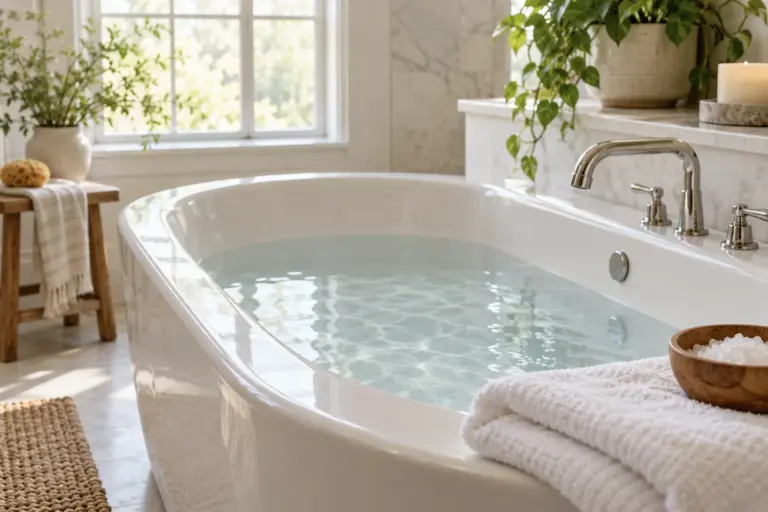
- Warm baths. NIDDK suggests sitting in a tub of warm water several times a day to ease pain; the NHS suggests a warm bath for itching and pain. Our sitz bath guide covers the technique.
- Cold packs. The NHS suggests an ice pack wrapped in a towel to ease discomfort.
- Gentle cleaning. Pat dry instead of rubbing; keep the area clean and dry (NHS).
- Short-term OTC creams or suppositories. NIDDK says these may relieve mild pain, swelling and itching of external hemorrhoids and that doctors usually recommend them for about a week; see a doctor if they do not help after a week. More in how to use hemorrhoid cream correctly.
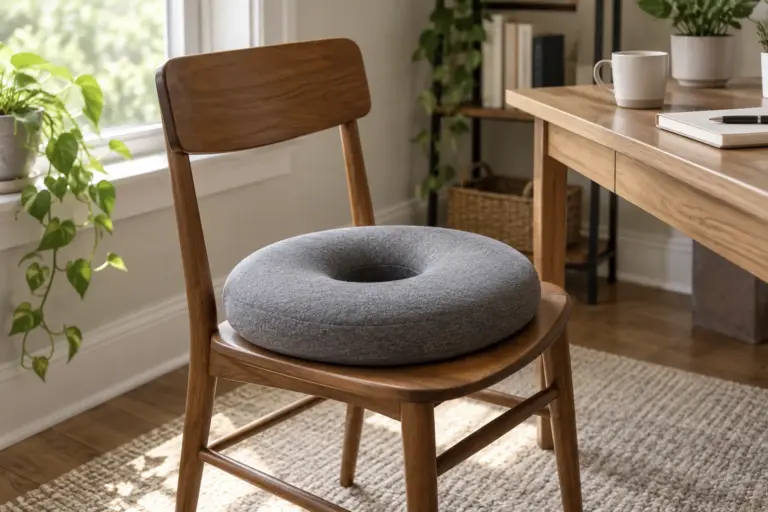
- Movement and breaks from sitting. Our exercise guide covers what helps and what to avoid. If you sit for long stretches, a hemorrhoid cushion can also take some pressure off.
If you only do the items on this list, you have done what the major health services recommend. Everything below is an extra, and the extras should be judged by whether they are safe before whether they are helpful.
Remedy-by-remedy table
"Evidence" here means what we could verify from the sources listed at the bottom of the page. "Limited" means small or low-quality studies, or no studies we could find for hemorrhoids specifically. This is not a recommendation to use anything in the table.
| Remedy | Evidence for hemorrhoids | Main safety points | Our read |
|---|---|---|---|
| Fiber and fluids | Recommended first-line by NIDDK and the NHS | Increase gradually; ask a clinician if you have bowel disease or take medicines affected by fiber | Do this first |
| Warm bath / sitz bath | Recommended by NIDDK and the NHS for pain and itching | Water should be comfortably warm, not hot; avoid scented products on irritated skin | Reasonable |
| Cold pack in a towel | Suggested by the NHS for discomfort | Never place ice directly on skin; limit sessions | Reasonable |
| Epsom salt in the bath | We found no hemorrhoid-specific trials; see Epsom salt for hemorrhoids | May sting broken skin | Optional; the warm water is what is supported |
| Aloe vera gel (topical) | Limited for hemorrhoids; generally well tolerated on skin (NCCIH) | Rarely burning, itching or rash; never oral latex; see aloe vera for hemorrhoids | Optional, with a patch test |
| Witch hazel pads | Widely used topically; we could not verify strong trial evidence | Alcohol-containing products can sting; see wipes and witch hazel pads | Optional comfort measure |
| Coconut oil (topical) | No hemorrhoid-specific trials found; see coconut oil for hemorrhoids | May irritate or cause allergy in some; can degrade latex condoms | Limited; not a treatment |
| Tea tree oil / essential oils | No reliable evidence for hemorrhoids; NCCIH: tea tree oil should not be swallowed | Skin irritation and allergy; never ingest; pregnancy caution; see tea tree and essential oils | We would skip |
| Apple cider vinegar on the skin | No reliable evidence found | Acidic; can sting or burn irritated skin | We would skip |
| Horse chestnut seed extract, butcher’s broom, diosmin | Some evidence for related vein conditions (NCCIH, Cochrane); hemorrhoid evidence is limited | Interactions, pregnancy, side effects; see herbal supplements for hemorrhoids | Ask a clinician or pharmacist first |
| Ginkgo | No conclusive evidence for any health condition (NCCIH) | May raise bleeding risk with anticoagulants such as warfarin | Do not use for hemorrhoids without medical advice |
| Potato, tea bags, other kitchen pastes | No evidence we could find | Contamination and irritation risk on broken skin | We would skip |
| Squatting-style footstool | Position changes are a common-sense strain reducer; evidence for hemorrhoids is limited | Low risk | Fine if comfortable |
The "natural" remedies in more detail
Aloe vera gel
The NCCIH says topical aloe gel is generally well tolerated, with occasional burning, itching or rash, and that small studies suggest possible benefits for some skin problems such as burns. We could not verify trials of aloe for hemorrhoids themselves. Oral aloe latex is a different product with different risks: it can cause abdominal pain, cramps and diarrhea, and the FDA required it to be removed from over-the-counter laxatives in 2002 over safety data. See aloe vera for hemorrhoids: gel vs latex.
Tea tree oil and other essential oils
The NCCIH says tea tree oil should not be swallowed and that oral use has caused serious symptoms such as confusion, unsteadiness and coma; skin redness and irritation can occur. It lists no hemorrhoid evidence. Essential oils are concentrated, so any skin use needs dilution and caution, and the skin around the anus is sensitive. We do not advise using them on or near the anus, and never in the mouth, nose or rectum. Read tea tree oil and essential oils for hemorrhoids.
Coconut oil
Coconut oil is a common carrier for home-made creams. We found no hemorrhoid trials. As a plain moisturizer it is generally gentle, but some people react to it, and oils can weaken latex condoms. See coconut oil for hemorrhoids.
Epsom salt
Epsom salt is magnesium sulfate. It is a popular bath additive for sore muscles and, by extension, hemorrhoids, but we did not find hemorrhoid trials, and the warm water itself is the part with supporting guidance. See Epsom salt for hemorrhoids.
What we would skip
- Anything that burns, stings or tingles on purpose. Pain is a signal that the skin is being irritated. This covers undiluted vinegar and undiluted essential oils.
- Anything inserted into the rectum that is not a medicine made for it. Home-made suppositories can contain irritants, and we found no evidence supporting them.
- Anything swallowed that is sold as a hemorrhoid shrinker without a pharmacist’s check, especially in pregnancy or with medicines.
- "Permanent fix in days" promises. Hemorrhoids often return if the habits that caused them continue; the NHS notes that treatment does not always prevent piles from coming back.
- Delaying a check because a remedy seems to work. Easing symptoms does not tell you the cause.
Supplements: ask first
Supplements are not regulated like medicines, and strength can vary between brands. The two best-known groups for hemorrhoids are flavonoid products (diosmin is one commonly sold) and horse chestnut seed extract. A Cochrane review of 24 studies of phlebotonics (a class that includes plant flavonoids) found statistically significant benefit for bleeding, itching and overall symptoms compared with controls, but the authors noted methodological limitations and called for more robust trials. The NCCIH says standardized horse chestnut seed extract is likely safe for short-term use, that raw seeds, bark, flowers and leaves are unsafe by mouth, and that little is known about use in pregnancy.
Ginkgo is a different case. The NCCIH says it may increase the risk of bleeding in people taking anticoagulant drugs such as warfarin and that there is no conclusive evidence it helps any health condition. Some home-remedy guides recommend it anyway. If you take a blood thinner, do not add it. We go through these in herbal supplements for hemorrhoids. We give no dosing advice on this site; follow your clinician or pharmacist.
What natural-remedy guides add, and where they go too far
We read the member copy of one paid natural-remedy program, the Hemorrhoids Healing Protocol, that the publisher provided to us. Like many such guides, it goes well beyond fiber and baths: it devotes a long section to herbs, essential oils and home-made creams. The basic habit advice overlaps with first-line guidance; the herbal and essential-oil material has weaker evidence, and some points (for example, pregnancy and blood-thinner cautions) are not handled as carefully as we would want. Our full program review lays out what it contains and where we disagree.
Affiliate note: the button below is an affiliate link. If you buy through it we may earn a commission at no extra cost to you. The publisher, Blue Heron Health News, gave us a free member copy of the program so we could read it; that did not buy a positive review. The publisher’s own sales page makes stronger claims than we can support, and we do not endorse them. How we handle this.
If you want a structured routine: the Hemorrhoids Healing Protocol is a $49 PDF with a three-week routine, recipes and a long section on herbs and oils. It is not a medical treatment, it is not for bleeding that has not been examined, and much of its habit advice is free on NHS and NIDDK pages. Read our review first.
When home care is not enough
See a clinician if symptoms last beyond about a week of home care (NIDDK), if you have any rectal bleeding that has not been examined, if you have a lump that stays out or becomes very painful, or if you notice a change in bowel habit. Office procedures such as rubber band ligation, sclerotherapy and infrared photocoagulation are described by NIDDK; surgery is for large external or prolapsing hemorrhoids that do not respond to other treatments. See rubber band ligation: what to expect, prolapsed hemorrhoid and thrombosed hemorrhoid.
Questions to ask your doctor or pharmacist
- Which of the home measures fit my symptoms and my medicines?
- Is it safe for me to use a fiber supplement, cream or any herbal product?
- Do I need an examination for bleeding before I try anything?
- How long should I try home care before I come back?
- If I am pregnant or breastfeeding, which of these are off-limits?
Frequently asked questions
What is the fastest home remedy for hemorrhoids?
There is no instant fix. The quickest supported combination is soft stools, no straining, warm baths for comfort and a short course of an over-the-counter product if needed. See our guide to relieving hemorrhoid pain at home.
Do natural remedies for hemorrhoids work?
Some natural measures are the same as medical first-line advice, such as fiber, fluids and warm baths. Most herbs, essential oils and kitchen pastes lack good evidence for hemorrhoids, and some carry risks.
Is it safe to use essential oils on hemorrhoids?
We advise against using essential oils on or near the anus. They are concentrated, skin there is sensitive, and the NCCIH says tea tree oil should not be swallowed. Ask a clinician before using any oil.
Can I use herbal supplements for hemorrhoids if I take a blood thinner?
Do not add herbal supplements without asking your prescriber or pharmacist. Ginkgo, for example, may raise bleeding risk with anticoagulants, according to the NCCIH.
How long should I try home remedies before seeing a doctor?
NIDDK advises seeing a doctor if symptoms continue after one week of home treatment. Any rectal bleeding should be examined at least once, and emergency signs mean going the same day.
Do hemorrhoids go away on their own?
Mild ones often settle once the cause is removed, but they tend to come back if constipation and straining continue. See our guide on whether hemorrhoids go away on their own.
Related reading
- Bleeding Hemorrhoids: What’s Normal and When It’s an Emergency
- How to Relieve Hemorrhoid Pain Fast at Home
- How to Shrink Hemorrhoids: What Works and What Doesn’t
- Sitz Bath for Hemorrhoids: How to Do It Right
- Hemorrhoid Diet: What to Eat, What to Limit, and a 7-Day Plan
- Do Hemorrhoids Go Away on Their Own?
Medical disclaimer and last review. This page is general education, not medical advice, and it does not replace an examination by a clinician. It was written by the Comfort Below editorial team and has not been reviewed by a medical professional. Last reviewed on 20 October 2026 against the sources listed below. See our medical disclaimer.
Sources and further reading
Affiliate disclosure: some links on this page are affiliate links. If you buy through them we may earn a commission at no extra cost to you. See our affiliate disclosure and medical disclaimer.